Austin is one of the most chicken-friendly big cities in Texas — but there are rules, and they matter. Before you bring home your first flock or order a coop, here's what the city actually says.
How Many Chickens Are Allowed in Austin?
Under Austin City Code Chapter 3-4, most residential properties can keep up to six hens. Roosters are prohibited in residential zones citywide — the noise ordinance makes this essentially a hard rule in all practical situations.
Six hens is actually a solid flock for most backyards. Well-managed hens in good housing will give you 4–5 eggs a day through their peak laying years, which is plenty for a household and still leaves extras to share with neighbors.
Coop Setback Requirements
Austin requires that your coop be set back a minimum distance from:
- 10 feet from any neighboring property line
- 25 feet from any neighboring residential dwelling
These setbacks apply to the coop structure itself, not to where the chickens range. If you have a small urban lot, measure carefully before deciding on placement. In some older Austin neighborhoods with narrow lots, this can be tight.
Note: These requirements can vary by zoning district. Always verify with the City of Austin Development Services Department for your specific address before building or placing a structure.
Do You Need a Permit?
For most standard chicken coop sizes (under 200 square feet), Austin treats them as accessory structures that don't require a building permit. However:
- If your coop is over 200 sq ft, a permit may be required
- Some zoning districts have additional requirements
- HOA rules (if applicable to your property) can be more restrictive than city code
The fastest way to get a definitive answer: use the City of Austin's online permit and zoning portal at austintexas.gov, or call Development Services directly.
What About the Run?
Austin's ordinance covers the coop structure, but if your chickens have access to a run or yard, common sense and good neighbor relations apply. Keeping your birds contained — whether through a run or fencing — is strongly recommended even where not legally required.
A fully enclosed run also protects your flock from Austin's predator population: raccoons, opossums, foxes, and the occasional hawk are all present throughout the city.
Noise and Odor Rules
Hens are generally quiet. The noise ordinance issue that gets backyard chicken keepers in trouble in Austin is almost always related to roosters or poorly managed flocks. Hens do cluck, especially after laying, but this is comparable in volume to normal yard noise.
Odor is a function of management, not chickens per se. Keep the coop clean, use good bedding (pine shavings work well), and do regular deep cleans. A well-managed small flock in a quality coop should produce no noticeable odor to neighbors.
The Right Coop for an Austin Backyard
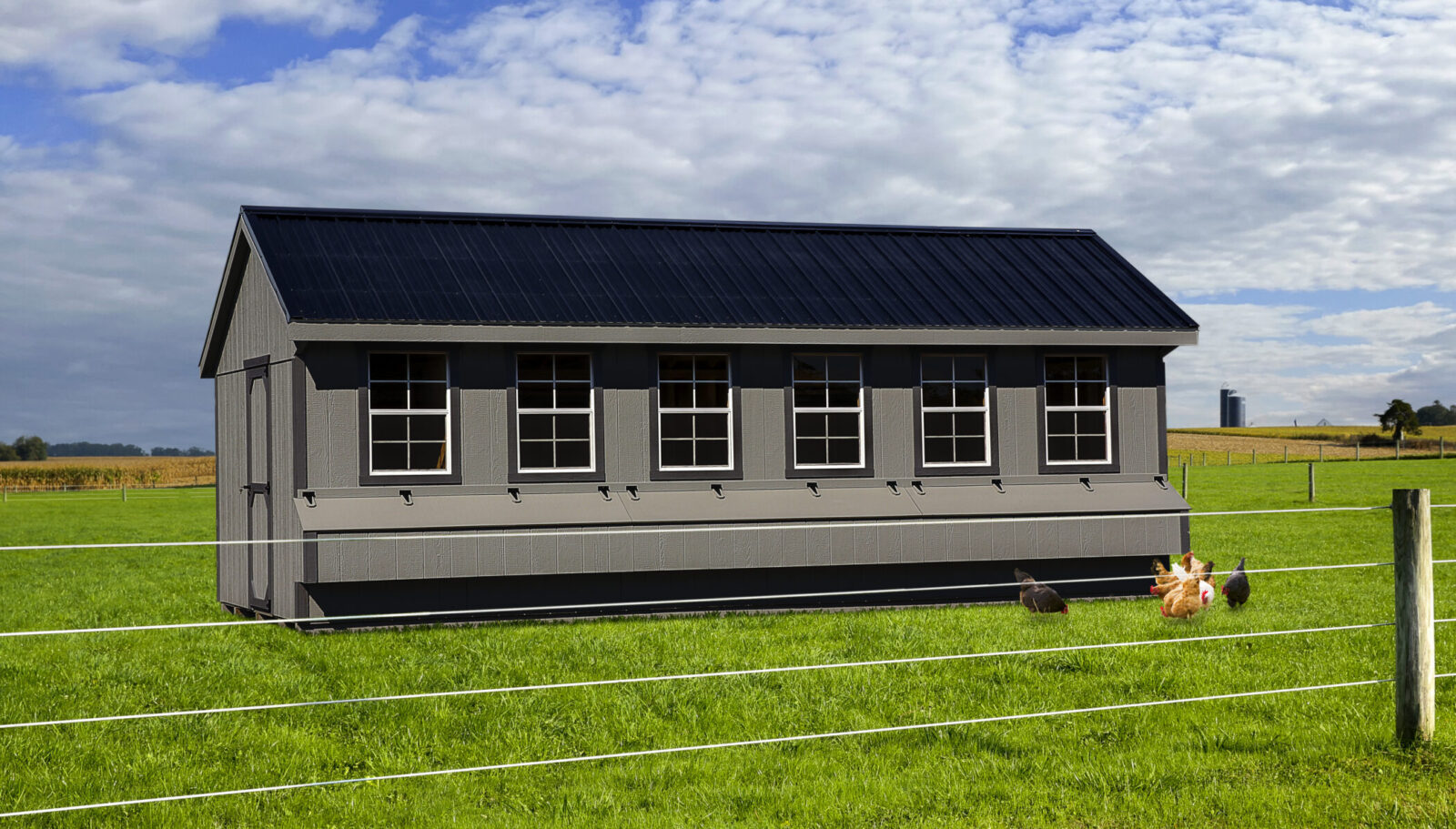
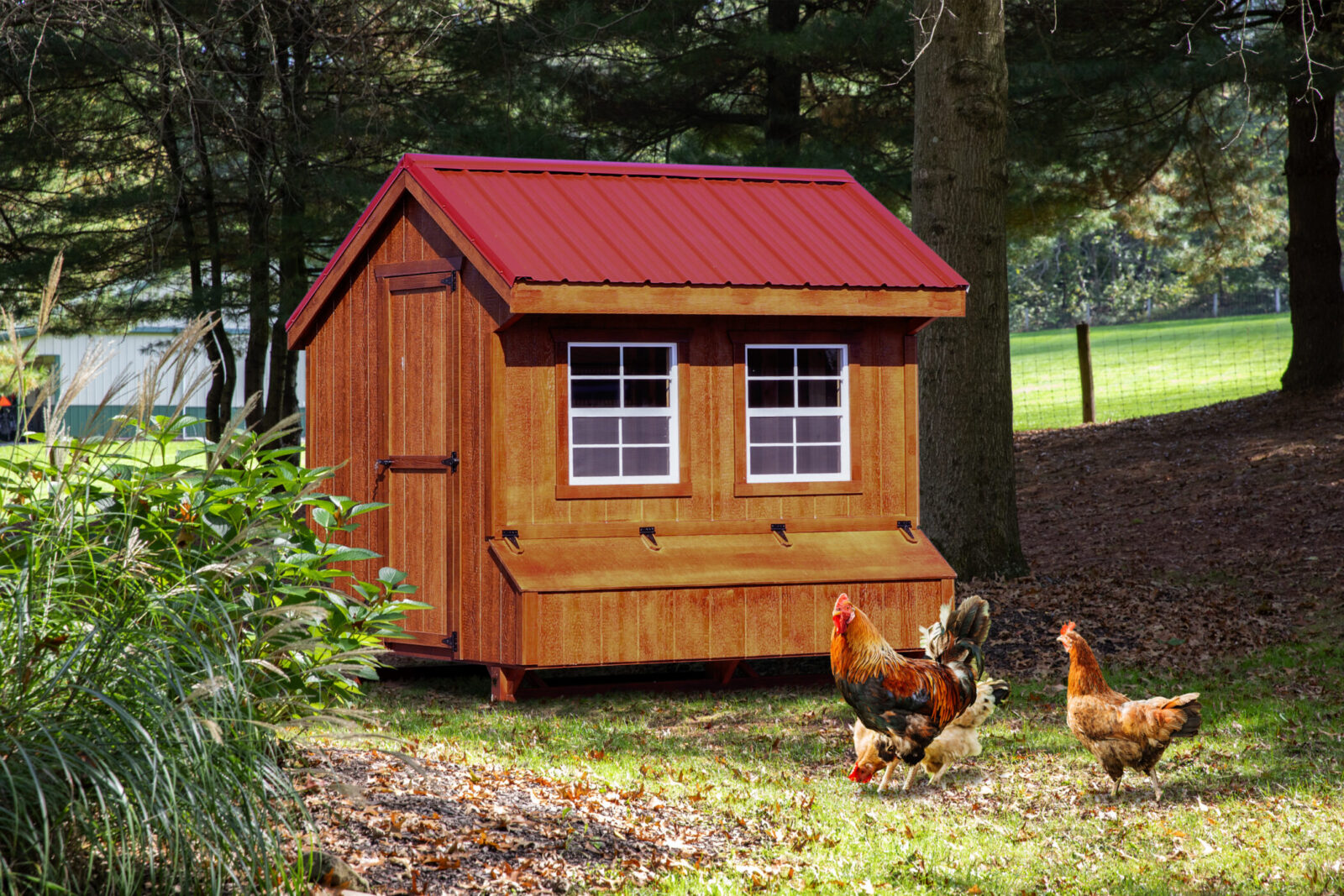
For six hens in a typical Austin urban or suburban backyard, we recommend a minimum 4×6 coop with an attached run. Our Quaker and A-Frame styles are both popular in Austin neighborhoods — they're sized right, have proper ventilation for Texas heat, and fit within most setback requirements.
If space is tight, the Combination coop integrates the run into the structure, which can help with placement constraints.
Quick Reference: Austin Chicken Rules
| Rule | Requirement |
|---|---|
| Maximum hens | 6 |
| Roosters allowed | No |
| Setback from property line | 10 feet |
| Setback from neighbor's home | 25 feet |
| Permit required | Usually not (under 200 sq ft) |
Start With the Right Foundation
Getting the regulations right is step one. Step two is getting a coop that's actually built to last. Austin summers are brutal — heat and humidity are hard on structures that use cheap siding or inadequate ventilation.
Our Amish-built coops use LP SmartSide® engineered siding and are built with proper ventilation from the ground up. They handle Central Texas weather the way a coop should: without warping, rotting, or falling apart in year two.
Browse our coop styles or contact us for help sizing a coop for your Austin property.