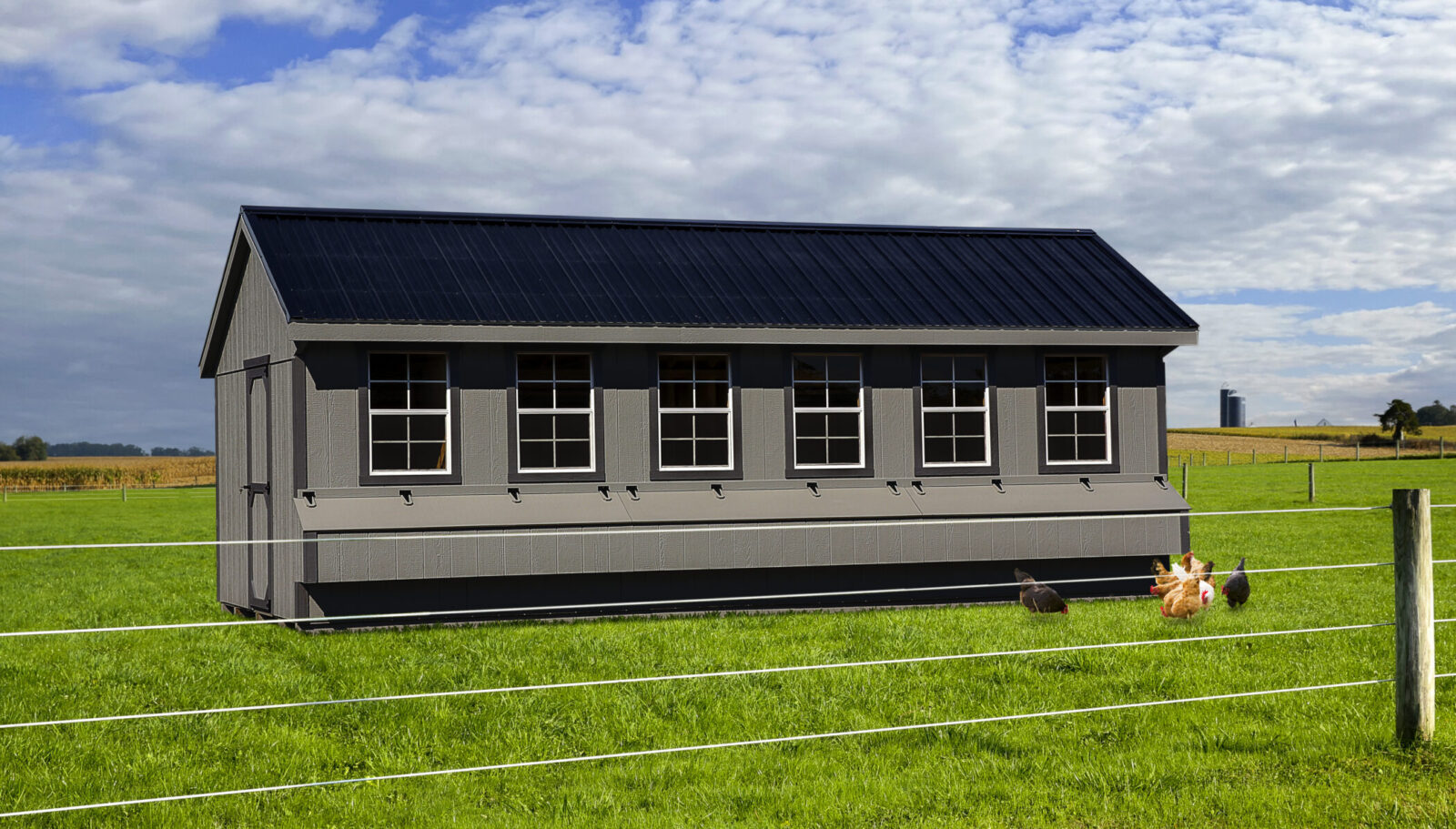

Getting a new coop is exciting. Getting the site wrong means a coop that sits crooked, collects water, bakes your birds in summer, or takes four hours to deliver because nobody planned for the access gate. Here's how to do the prep right — before delivery day.
Step 1: Choose the Right Location
Before you think about foundations or drainage, pick the right spot. In Central Texas, this means thinking hard about shade and drainage.
Shade in a Texas Summer
Heat stress is a real killer for backyard flocks in Central Texas. When temperatures hit 95–105°F in August — which they do, reliably — a coop in full afternoon sun becomes a danger zone for your birds, even with good ventilation.
The ideal placement:
- Morning sun (east-facing) is fine and actually beneficial — it helps dry overnight moisture
- Afternoon shade is critical. If you have a tree, a shed, or a fence line that blocks the western sun from 2pm onward, that's where your coop goes
- If you don't have natural shade, plan for a shade structure (a shade sail or a simple lean-to over the coop) before or shortly after installation
Drainage
Don't put your coop in a low spot or anywhere that holds water after rain. This seems obvious, but it's one of the most common siting mistakes we see. Standing water around the base of the coop wicks into the wood, attracts mosquitoes, and creates conditions for respiratory illness in your flock.
The site should be slightly elevated relative to the surrounding area, or at minimum on ground that drains well. A properly built gravel pad under the coop helps significantly — more on that below.
Step 2: Level the Ground
Chicken coops need to sit level. A coop on uneven ground means doors that don't close properly, eggs that roll to one side of the nesting box, and structural stress over time as the frame tries to settle into an uneven position.
The tolerance is roughly 2 inches of level across the footprint. More than that needs to be addressed before delivery.
How to level:
- For minor slopes (2–4 inches): a gravel pad with a compacted base handles this well
- For significant slopes (4+ inches): you'll need to grade the area or build a level platform
- When in doubt, send us a photo — we're happy to tell you whether a site looks workable
Step 3: Prepare the Foundation
A proper foundation extends your coop's life significantly and makes leveling easier. Your options, in order of our preference:
1. Gravel Pad (Recommended)
4–6 inches of crushed granite or decomposed granite, slightly larger than the coop's footprint, compacted. This is our most commonly recommended foundation:
- Excellent drainage
- Prevents direct soil contact and moisture wicking
- Easy to level
- Works with virtually any size coop
- Relatively easy DIY project
2. Concrete Slab
A poured concrete pad works well and is very durable. More expensive and labor-intensive than gravel, but a solid long-term choice if you're planning a permanent installation.
3. Paving Stones or Pavers
A level paver base works for smaller coops. Easier than concrete, more stable than bare ground.
4. Bare Ground
We can set directly on bare ground in a pinch, but this is our least preferred option. Direct soil contact invites moisture damage and pests, and bare ground tends to shift and settle unevenly over time.
Step 4: Plan the Access Path
This is the most-overlooked part of site prep, and it's the one that causes delivery day headaches.
Our delivery truck and trailer need a clear path from the street (or wherever we unload) to your placement site. The requirements:
- Minimum width: 10–12 feet clear (more for larger coops — ask us when you order)
- Height clearance: Watch for low-hanging branches, wires, and overhead obstacles
- Gate width: If you have a fence gate, it needs to be wide enough. Many residential gates are 4–5 feet wide — this is often too narrow. Measure before assuming
- Ground condition: The path needs to support the weight of our equipment without sinking. Soft or wet ground can be a problem, especially right after heavy rain
If your gate is too narrow, the coop may be able to be walked in from a different direction, or in some cases we can work around it — but talk to us ahead of time, not on delivery day.
Step 5: Plan for Predators
The site prep phase is the right time to think about predator management. Central Texas has raccoons, opossums, foxes, coyotes, hawks, and the occasional mink. All of them are interested in your chickens.
If you plan to add a hardware cloth apron around the coop's perimeter — which we recommend for properties where digging predators are active — laying that out before or shortly after coop installation is much easier than retrofitting it later.
The coops we carry have solid hardware cloth on all openings, which handles most predator threats. The weak point is almost always the ground: predators that dig under, not through.
Ready to Order?
Once your site is prepped, delivery and installation is straightforward. If you have questions about whether your site is ready, send us a message or email a photo to Amishacresjrl@gmail.com and we'll give you an honest assessment.
Learn more about our delivery process or browse our coop styles to get started.